
Commercial Real Estate Due Diligence Checklist for Atlanta Buyers
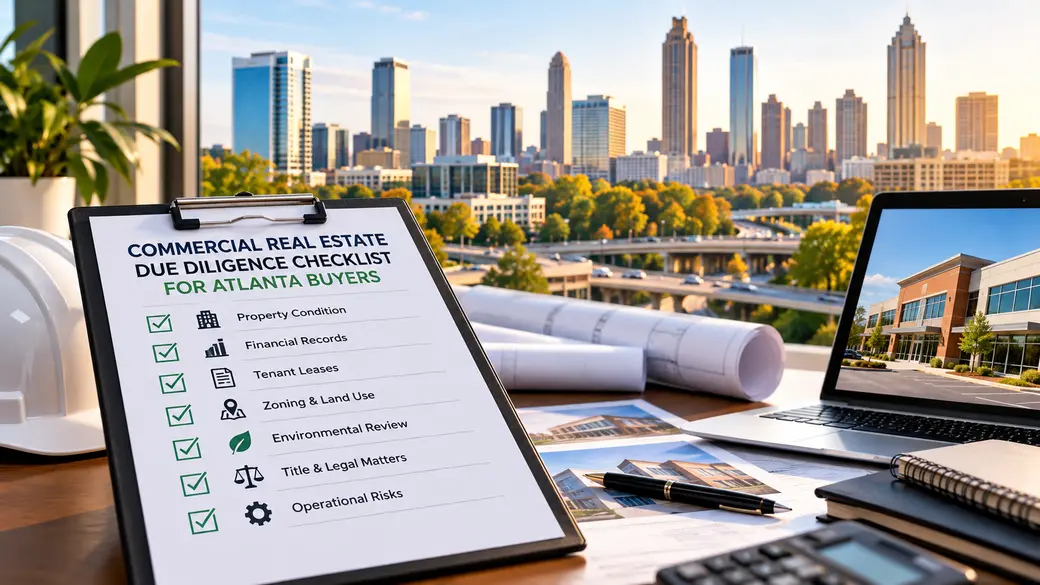
A commercial real estate due diligence checklist for Atlanta buyers helps uncover physical, financial, environmental, legal, and operational risks before closing. A polished building, advertised income, or seller-provided summary may be useful, but none replaces independent verification. Buyers should examine building systems, tenant leases, zoning, property records, title matters, and liabilities that may affect ownership.
Use this practical checklist to organize document requests, reports, and follow-up questions during the investigation period. The step-by-step guide to buying commercial real estate in Atlanta covers the broader acquisition process, while this article focuses specifically on due diligence before a buyer commits to closing.
What Is Commercial Real Estate Due Diligence?
Commercial real estate due diligence is the investigation and verification of a property's condition, income, ownership, legal restrictions, and operating risks before a purchase is completed. It helps a buyer confirm whether the property and its obligations match the proposed transaction.
The work generally takes place during the investigation period established by the purchase agreement, although preliminary research can begin before an offer is submitted. For office, retail, industrial, warehouse, and mixed-use properties, the review commonly includes building systems, operating records, lease documents, land-use requirements, title records, and environmental history.
A general walkthrough is only one part of the process. A walkthrough can identify visible wear, access concerns, or layout issues, while due diligence tests seller representations through records, specialized reports, public information, and reviews by qualified professionals. The goal is to identify material questions early enough to request clarification, obtain estimates, or evaluate contractual options before deadlines pass.
Step 1: Review the Property's Physical Condition
A physical-condition review identifies defects and deferred maintenance that can change the real cost of acquiring a commercial property. Start with the roof's age, condition, warranty information, and maintenance history, then review foundations, structural components, visible cracking, and exterior surfaces.
Buyers should also investigate HVAC, electrical, plumbing, drainage, water intrusion, moisture concerns, parking lots, sidewalks, fire protection systems, and accessibility issues. These components can influence daily operations, insurance decisions, tenant comfort, and the timing of future capital work. Site conditions matter as well, particularly where drainage patterns, pavement deterioration, or exterior access could affect tenants, deliveries, or customer traffic.
Deferred maintenance may become more disruptive and expensive after closing, especially when repairs interrupt occupancy or require specialized contractors. A failing roof, recurring drainage problem, or aging mechanical system can affect operating plans and create substantial unbudgeted work.
Use qualified commercial building inspectors and, when appropriate, roofing, HVAC, electrical, structural, or fire-protection specialists. Request written inspection reports and repair estimates that identify priorities and likely scope. Verbal assurances alone are not sufficient support for a major acquisition decision.
Step 2: Verify Financial Records, Operating Expenses, and Rent Rolls
Financial due diligence verifies whether an income-producing property's actual performance supports the seller's stated income and expense picture. Buyers should compare historical income and expense statements with bank records, invoices, rent collections, tax bills, insurance documents, and service contracts rather than relying on projections or listing descriptions.
Review current rent rolls, actual collections, signed lease information, concessions, delinquent balances, and recurring operating expenses. Property tax bills deserve particular attention because the parcel's assessment history, tax district, and ownership changes can affect future costs. Buyers should confirm parcel records and tax information with the applicable assessor or tax office.
Insurance premiums, utility bills, maintenance agreements, vendor invoices, outstanding payments, and planned capital expenditures can reveal costs missing from a high-level financial summary. Compare each seller-provided category with supporting records to identify overstated rental income, unexplained expense changes, or incomplete obligations.
A qualified accountant and commercial advisor can help organize financial materials and identify questions that require documentation. The purpose is document verification and risk identification, not a shortcut to investment-return calculations. A careful review also helps buyers separate routine operating costs from obligations that may require immediate attention after closing.
Step 3: Examine Tenant Leases and Occupancy Records
Lease verification establishes what income rights and landlord obligations will transfer with an occupied commercial property. Review signed leases, amendments, expiration dates, renewal options, security deposits, concessions, tenant-improvement obligations, unpaid rent, and written correspondence concerning unresolved matters.
Lease structure affects the owner's responsibilities. Gross leases and triple-net leases can allocate taxes, insurance, maintenance, utilities, common-area expenses, and repairs differently, so buyers should confirm the actual language of every agreement. A lease abstract can help organize key dates, options, rent changes, and obligations across multiple tenants.
Tenant estoppel certificates can confirm lease terms directly with occupants and may reveal differences between seller representations and tenant understandings. Buyers should identify approaching expirations, vacancy exposure, tenant concentration, and incomplete landlord work before closing. A property with several leases ending within a similar period may require a more detailed review of renewal prospects and potential downtime.
For vacant or owner-occupied properties, the review should instead address possession timing, delivery conditions, occupancy rights, and any contractual commitments that could affect the buyer's planned use.
Step 4: Confirm Zoning, Permitted Uses, and Local Property Compliance
Zoning due diligence confirms whether a buyer's intended use is legally permitted at the property under the applicable Atlanta, {State}, land-use requirements. Buyers should verify the zoning classification, allowed uses, parking and access requirements, signage limits, exterior-modification rules, available permits, certificates of occupancy, nonconforming-use status, and pending land-use changes.
The correct regulator depends on the parcel, not simply its mailing address. A property associated with Atlanta may be subject to a city or county jurisdiction, depending on its location and governing boundaries. Buyers should determine which planning, zoning, or building department has authority before relying on general information.
For example, a buyer may plan to convert a former retail building to a more intensive business use, then learn that the expected parking, access, occupancy, or use approvals are not in place. That result can lead to delayed occupancy, redesign costs, added documentation, or restrictions on business operations.
Confirm zoning and permitting information in writing with the appropriate planning, zoning, or building department. A mailing address does not necessarily establish which municipality regulates a parcel. Local requirements vary by property and proposed use, so property-specific confirmation is more reliable than assumptions based on nearby buildings or prior marketing materials.
Step 5: Investigate Environmental Risks and Property History
Environmental due diligence identifies historical conditions that may create costs, financing concerns, insurance questions, or operational limitations after a commercial purchase. It is especially important for industrial, automotive, manufacturing, warehouse, and other properties with potentially sensitive current or former uses.
A Phase I Environmental Site Assessment, commonly called a Phase I ESA, reviews historical uses, records, site conditions, and nearby activities to identify recognized environmental conditions. It is designed to help buyers understand whether past or present property conditions warrant further investigation before closing.
The review may identify concerns involving underground storage tanks, historical industrial activity, soil or groundwater contamination, hazardous-material storage or disposal, and recorded land-use limitations. When additional investigation is warranted, environmental professionals may recommend a Phase II assessment that involves sampling or other more detailed testing.
Environmental findings can affect lender requirements, insurance, remediation responsibility, and transaction negotiations. A Phase I ESA is not automatically required for every commercial transaction, but buyers should consult qualified environmental professionals and lenders about the appropriate assessment scope, standards, and documentation for the property. Early review is particularly valuable when a property's history is incomplete or inconsistent.
Step 6: Review Title, Property Surveys, Easements, and Legal Restrictions
Title and survey review confirms what ownership rights the buyer is receiving and what recorded restrictions may affect the property. Buyers should examine preliminary title commitments or title reports, liens, judgments, encumbrances, easements, access rights, deed restrictions, covenants, and the legal description.
Survey information can reveal boundary questions, encroachments, shared driveways, utility corridors, and access arrangements that are not obvious during a site visit. An ALTA/NSPS land title survey may be useful when buyers or lenders need a detailed depiction of boundaries, improvements, easements, and survey-related matters.
An easement may be routine, but it can also limit future construction, parking, signage, access, or redevelopment plans. Unresolved title matters can delay financing, complicate future resale, or require curative work before closing. Buyers should also compare the survey, title materials, and intended site plan to identify conflicts that may affect operations.
Work with a commercial real estate attorney, title professional, and qualified surveyor when the transaction calls for their expertise. Their review can help identify questions requiring resolution without substituting general guidance for legal conclusions.
Step 7: Identify Hidden Liabilities and Potential Deal-Breakers
Hidden liabilities are risks that may not be apparent during an initial property tour but can materially affect transaction feasibility. Major deferred maintenance, unbudgeted repairs, or unpermitted construction may require additional reports, repair estimates, and confirmation that public records match the building's actual condition.
Financial red flags include unsupported income, unpaid rent, tenant disputes, vendor balances, and operating costs that differ from seller summaries. Buyers should trace each issue to leases, invoices, payment records, and written explanations. Environmental findings may require additional investigation, while zoning conflicts can delay occupancy or limit the intended business use.
Title problems, restricted access, easements, unresolved liens, and inconsistent survey information can affect financing, construction, operations, and resale. Unexpected insurance, tax, or contractual obligations also warrant review. A concern becomes more serious when its likely cost, timing, or legal effect remains unclear after reasonable follow-up.
Not every issue should end a transaction. Some matters can be addressed through documentation, repairs, credits, revised terms, or additional time for investigation. Buyers should evaluate findings with qualified advisors and distinguish manageable costs from problems that materially change the property's suitability for the intended use.
Step 8: Evaluate Your Commercial Real Estate Due Diligence Checklist Findings
Buyers should consolidate reports and documents into a clear findings list before deciding how to proceed. Compare physical reports, financial records, lease materials, environmental results, title documents, surveys, and zoning information against the purchase agreement and the property's intended use.
Next steps may include obtaining repair estimates, requesting missing records, seeking seller clarification, ordering specialized reviews, and documenting unresolved concerns. Depending on the findings, a buyer may discuss a price adjustment, credit, repair commitment, investigation-period extension, or other contract amendment.
Available remedies and termination rights depend on the signed purchase agreement, applicable law, notice procedures, and relevant deadlines. Buyers should review material issues promptly with their commercial real estate attorney and advisor rather than waiting until the end of the investigation period.
Use this commercial real estate due diligence checklist for Atlanta buyers to organize records, specialist reports, and time-sensitive follow-up before closing.
Commercial Real Estate Due Diligence Checklist for Atlanta Buyers
| Due Diligence Category | What to Verify | Recommended Document or Professional | Status |
|---|---|---|---|
| Roof and structure | Age, condition, leaks, repairs, visible damage | Commercial inspection report, roofing contractor | Not Started |
| Building systems | HVAC, electrical, plumbing, fire protection | Specialist reports and maintenance records | Not Started |
| Site condition | Drainage, parking, sidewalks, access, exterior improvements | Site walk, engineer, or contractor | Not Started |
| Environmental conditions | Historical uses and recognized environmental conditions | Phase I ESA, environmental consultant | Not Started |
| Financial statements | Historical income, expenses, invoices, capital costs | Operating statements, accountant review | Not Started |
| Rent rolls and leases | Collections, expirations, options, deposits, obligations | Rent roll, signed leases, estoppels | Not Started |
| Taxes and insurance | Current bills, claims history, premiums, assessments | Tax records, insurance documents | Not Started |
| Zoning and permitted uses | Zoning classification, intended use, parking, signage | Planning or zoning department records | Not Started |
| Permits and occupancy | Permits, final approvals, occupancy documentation | Building department records | Not Started |
| Title and liens | Ownership, liens, judgments, restrictions | Title commitment, attorney review | Not Started |
| Survey and easements | Boundaries, access, encroachments, utility rights | ALTA/NSPS survey, surveyor | Not Started |
| Contracts and repairs | Service agreements, warranties, estimates, unresolved issues | Vendor contracts, repair estimates | Not Started |
Pro Tip: Check These Often-Overlooked Commercial Property Records
Pro Tip: Historical utility bills, property tax records, available insurance claims history, maintenance contracts, and tenant estoppel certificates can reveal costs or obligations absent from marketing materials.
Utility patterns may point to inefficient systems, while prior claims can identify recurring water, roof, or security concerns.
Before the due diligence deadline, request these records in writing and compare them with operating statements, leases, and service invoices. Flag unexplained cost changes, contract renewal dates, or tenant-reported obligations for follow-up with the seller and the appropriate specialist.
Work With an Atlanta Commercial Real Estate Advisor
Commercial real estate buyers benefit from an organized review process that coordinates seller materials, specialist reports, contractual deadlines, and property-specific questions. Understanding Atlanta-area property conditions, municipal requirements, and local transaction practices can help buyers focus attention on the records that matter before closing.
Danesha Ritzberg of Ritzberg Realty Commercial Real Estate can provide structured commercial real estate guidance in Atlanta for buyers evaluating office, retail, industrial, warehouse, and mixed-use opportunities. Contact Danesha Ritzberg at +1(404) 853-8619 or ritzbergrealtyassistant@gmail.com to discuss commercial property goals, due diligence priorities, and transaction planning.
Frequently Asked Questions About Commercial Real Estate Due Diligence
What is included in a commercial real estate due diligence checklist?
A commercial real estate due diligence checklist typically covers physical condition, financial records, tenant leases, environmental history, title, surveys, zoning, permits, insurance, taxes, and service contracts. The final scope should reflect the property type, intended use, purchase agreement, lender requirements, and issues identified during the review.
How long does commercial real estate due diligence take in Atlanta?
Commercial due diligence in Atlanta takes as long as the purchase agreement, property complexity, document availability, lender requests, and inspection needs require. A multi-tenant building, older systems, environmental questions, or title concerns may require more coordination than a straightforward owner-occupied property.
Who pays for commercial property inspections during due diligence?
Inspection responsibility depends on the purchase agreement and negotiated transaction terms, although buyers commonly arrange and pay for their own inspections. Buyers should confirm the inspection scope, fees, scheduling, and report-delivery dates early enough to assess findings before contractual deadlines expire.
Is a Phase I Environmental Site Assessment required for commercial property?
A Phase I Environmental Site Assessment is not legally required for every commercial purchase, but a lender may require it and buyers often use it for risk management. Whether it is appropriate depends on the property's history, current conditions, financing, intended use, and environmental-professional guidance.
What are the biggest red flags when buying commercial real estate?
Major commercial-property warning signs include structural problems, deferred maintenance, unverifiable income, unpaid rent, environmental concerns, unpermitted work, and unresolved title or zoning issues. Each concern should be supported by records or professional review so the buyer can evaluate its cost, timing, and operational impact.
Can a buyer cancel a commercial real estate purchase after due diligence?
A buyer may have cancellation rights after due diligence when the signed purchase agreement includes applicable contingencies, notice procedures, and deadlines. The available rights depend on the contract and relevant law, so a commercial real estate attorney should review material findings before a final decision is made.
Categories
Recent Posts








"My job is to find and attract mastery-based agents to the office, protect the culture, and make sure everyone is happy! "